White House Touts Deals on Soybeans and Rare Earths After Trump-Xi Summit
Published May 18, 2026 5:05AM ET UPDATED 3:05PM ET
In the wake of the recent Trump-Xi summit, the White House has announced significant developments concerning trade, particularly focusing on soybeans and rare earth minerals. These agreements are seen as steps toward easing tensions between the two economic powerhouses.
As the U.S. government highlights these deals, China is also making headlines by discussing potential tariff cuts, aiming to bolster trade relations further. This collaborative approach from both nations signals a mutual interest in stabilizing economic ties, which could benefit various sectors including agriculture and technology.
The emphasis on soybeans is particularly noteworthy, as it could provide a lifeline for American farmers, while the focus on rare earths underscores the strategic importance of these materials in advanced manufacturing and technology. As discussions continue, stakeholders will be watching closely to see how these agreements unfold and impact global markets.
China Talks Up Tariff Cuts
In the wake of the recent Trump-Xi summit, significant developments have emerged regarding trade between the United States and China, particularly emphasizing agreements involving soybeans and rare earth minerals. These deals have been touted by the White House as essential steps toward reducing tensions between the two economic powerhouses.
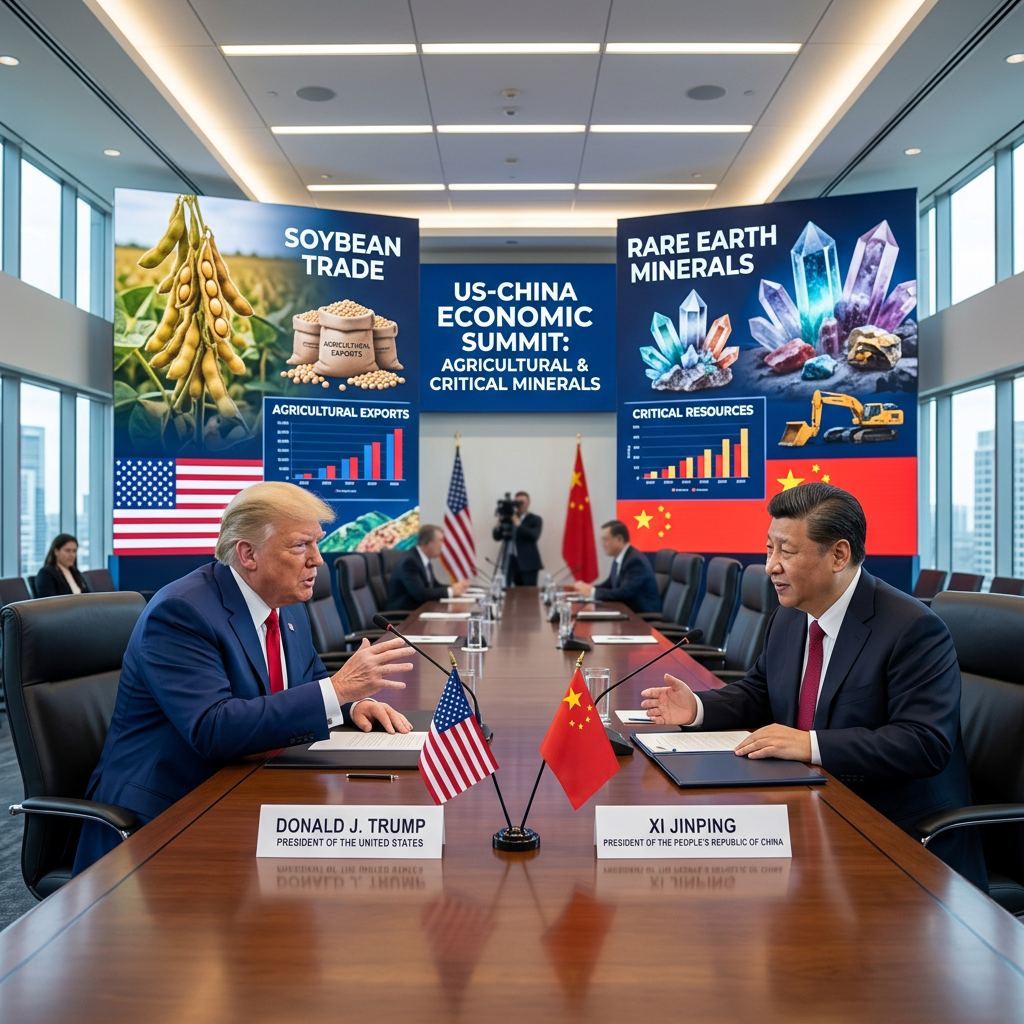
Key Agreements
The agreements focused primarily on the export of soybeans, a critical commodity for American farmers, and rare earth minerals, which are vital for various advanced manufacturing processes and technologies. The U.S. government has framed these trade deals as part of a broader strategy to enhance economic stability and cooperation with China. This approach not only aims to support domestic agriculture but also to reinforce the supply chain for high-tech industries in the U.S.
China’s Response
In parallel with these developments, China has been making headlines of its own by discussing potential tariff cuts. This move is seen as a way to further foster trade relations with the United States. By easing tariffs, China hopes to stimulate trade growth, which could have positive repercussions for multiple sectors, including agriculture and technology in both nations.
Implications for Stakeholders
The emphasis on soybeans is particularly crucial for American farmers, many of whom have faced financial challenges in recent years due to trade wars and market fluctuations. The commitment to increase soybean exports could provide much-needed economic relief to this vital sector.
Conversely, the focus on rare earth minerals highlights the strategic significance of these materials. Rare earths are essential for producing high-tech products, ranging from smartphones to electric vehicle batteries. As global demand for technology continues to grow, securing a stable supply of these resources becomes even more critical.
What’s Next?
As discussions surrounding these agreements progress, stakeholders across various industries are closely monitoring the situation. The outcome of these negotiations will certainly influence global markets and shape the future of U.S.-China relations. Analysts will be keen to see whether these partnerships can indeed lead to a more stable and mutually beneficial economic environment.
In conclusion, the recent summit has set the stage for renewed collaborative efforts between the U.S. and China, highlighting trade agreements that could potentially transform key sectors of the economy while striving for a more harmonious bilateral relationship.
 Media Air Base, LLC
Leave a comment