The Federal Reserve announced late last year that it had completed the process of allowing the assets in its portfolio to expire and roll off, resulting in a reduction of its total holdings.
However, during the same period, former Fed governor Kevin Warsh suggested that these efforts were insufficient. He argued that persistently shrinking the balance sheet could be essential for achieving lower borrowing costs, which could have significant implications for the broader economy.
What to know about Trump’s Fed chair
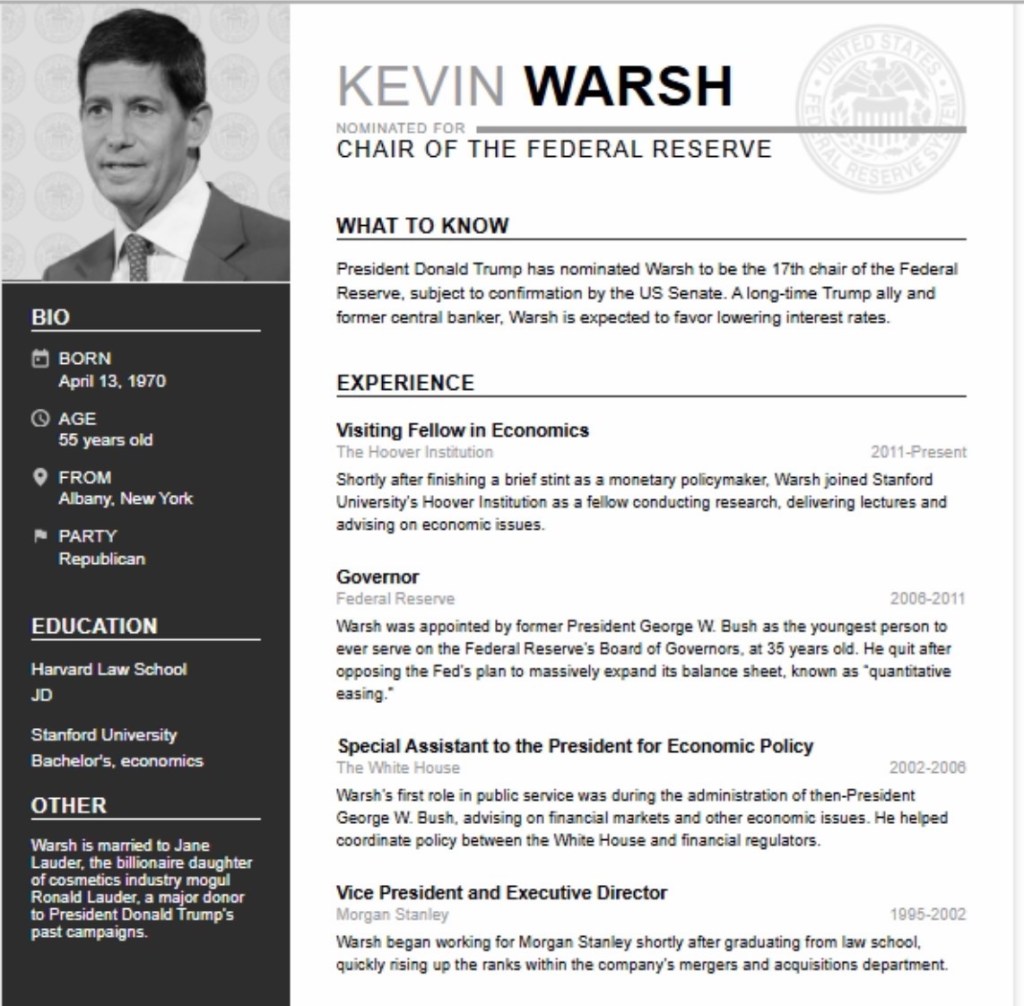
Understanding Kevin Warsh’s Perspectives on the Federal Reserve and Rate Cuts
The landscape of monetary policy is constantly evolving, influenced by economic conditions and the judgments of key figures in the financial world. One such figure is Kevin Warsh, a former governor of the Federal Reserve, whose recent views on interest rates and the Fed’s balance sheet management have garnered considerable attention.
Warsh’s Shift in Views on Fed Policy
Kevin Warsh was once a staunch advocate for tightening monetary policy and controlling inflation. However, in recent times, his perspective has shifted significantly. While initially supporting more conservative measures, Warsh now argues for a reevaluation of the Fed’s approach, particularly regarding interest rates. He has suggested that maintaining a persistently shrinking balance sheet is vital for fostering an environment conducive to lower borrowing costs, which he believes is crucial for stimulating the broader economy.
Warsh’s transformation in policy stance reflects a growing concern over economic conditions that require a more flexible approach to interest rates. As inflationary pressures fluctuate and economic growth remains uncertain, Warsh suggests that the Fed must adapt its strategies to provide the necessary support for sustained recovery.
The Implications of Rate Cuts
As Warsh and others in the financial sector continue to grapple with the complexities of the current economic landscape, Wall Street anticipates that the Fed may eventually embrace rate cuts as a tool for facilitating growth. Lowering interest rates can lead to several positive outcomes, including:
- Increased Borrowing: Lower interest rates make borrowing more affordable for consumers and businesses. This can stimulate spending and investment, contributing to economic growth.
- Support for Financial Markets: Rate cuts can boost investor confidence, leading to higher stock prices and improved market conditions overall.
- Encouragement for Spending: With reduced borrowing costs, consumers may be more inclined to make significant purchases, driving demand within the economy.
- Stimulus for Job Creation: As businesses benefit from lower borrowing costs, they may be more likely to invest in expansion and hiring, thereby bolstering employment levels.
However, the challenge that Warsh and the Fed face is balancing these potential benefits against the risks of inflation and long-term economic stability. As the Fed navigates these complexities, Warsh is likely to continue advocating for strategies that prioritize economic resilience and manageable inflationary expectations.
Conclusion
Kevin Warsh’s evolving views on the Federal Reserve’s monetary policy underscore the ongoing debate surrounding interest rates and their impact on the economy. As Wall Street closely monitors these developments, it remains clear that the decisions made by the Fed and influential figures like Warsh will play a crucial role in shaping the financial landscape in the years to come.
By understanding the implications of rate cuts and the motivations behind policy shifts, investors and consumers alike can better navigate the uncertainties of the economic environment.
 Media Air Base, LLC
Leave a comment